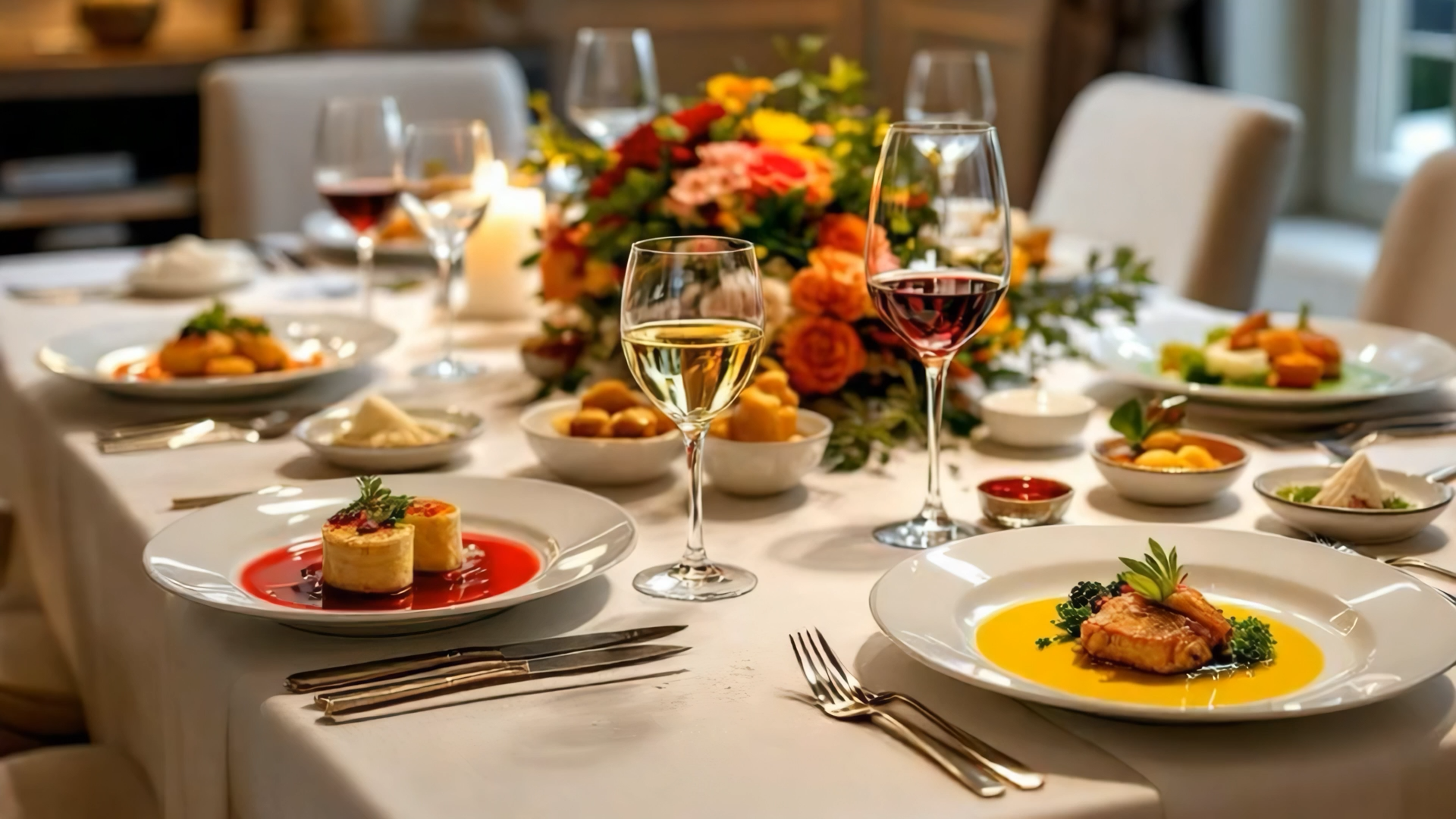
The table is set perfectly. The
Operation
behind it may not be.
Every Michelin-starred moment at the pass was preceded by a thousand operational decisions — about what was ordered, what was prepared, who was trained to serve it, and whether the cover that reserved that table three weeks ago would be remembered as a loyal guest or treated like a first-time visitor. The art of fine dining is visible. The architecture that sustains it at scale is not.
A perspective for operators building fine dining groups that endure
Six acts that must be perfect — and each one fails differently at scale.
In a professional kitchen, mise en place means everything in its place before service begins. Every ingredient weighed, every station ready, every sequence rehearsed. Fine dining at scale demands the same discipline — not in one kitchen, but across every property, every team, and every guest interaction. The difference between a night that feels effortless and one that unravels is almost never the food.
"The best fine dining experiences feel spontaneous. They are anything but. Behind every seamless evening is an operational system running at precision no guest should ever notice."
Operating more than one property? These challenges are already compounding.
Speak with someone who understands the operational architecture of fine dining groups — not just the technology.
Five places where fine dining groups quietly lose ground
The problems that damage fine dining operations rarely announce themselves. They accumulate as small inconsistencies, invisible margin erosion, and guest experiences that were almost — but not quite — what they should have been.
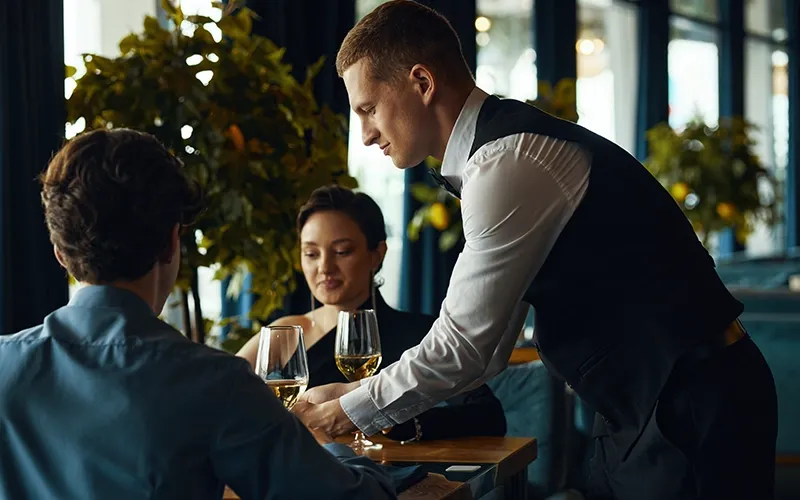
The service standard that cannot be replicated
The founder-led fine dining group has a natural ceiling — the standard of the flagship. As new properties open, every deviation from that standard is invisible to head office and visible to every guest who has experienced the original. Without operational architecture connecting every property, the group is only as consistent as its least-managed evening.
- Floor plans, cover allocations, and turn-time logic managed separately at each property — no centralised visibility into how the estate is performing on any given service
- Course-based ordering enforced through verbal briefing rather than system — kitchen orchestration degrades under pressure and varies by team
- New property openings use the same configuration process from scratch — weeks of setup time for integrations, menus, and table plans that already exist at the flagship
- Pre-shift briefings — wine pairing notes, daily specials, VIP arrivals — not systematically shared or confirmed across all staff before service begins
- No real-time visibility into floor performance during service — management identifying problems from guest feedback rather than live operational data
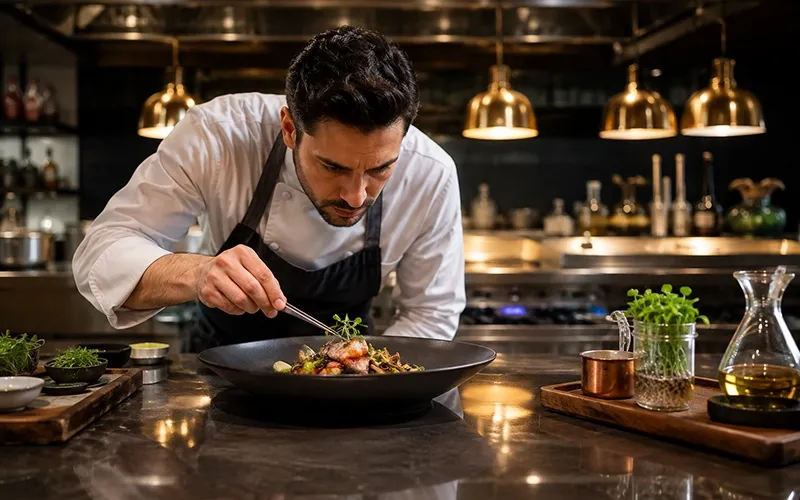
Premium ingredients require a different kind of precision
In a fine dining context, ingredient procurement is not a cost centre — it is the product. A two-week sourcing cycle for a specific truffle, a vintage wine allocation, a live seafood delivery that arrives at the wrong temperature — these are not operational inconveniences. They are menu-defining decisions that cannot be managed on spreadsheets or managed reactively.
- No recipe-level inventory depletion — stock counts for premium ingredients do not reflect actual consumption until someone physically checks the cold room
- Premium supplier lead times not factored into ordering logic — urgent re-orders at full price absorb a disproportionate share of ingredient margin
- Wine and beverage inventory managed separately from food inventory — no unified view of total cost-of-goods at the dish or tasting menu level
- Wastage at the preparation stage — trim loss, mis-en-place spoilage — not measured or costed, so actual dish-level margins are systematically overstated
- No centralised supplier performance tracking — late deliveries, quality failures, and substitutions managed informally and repeated without accountability
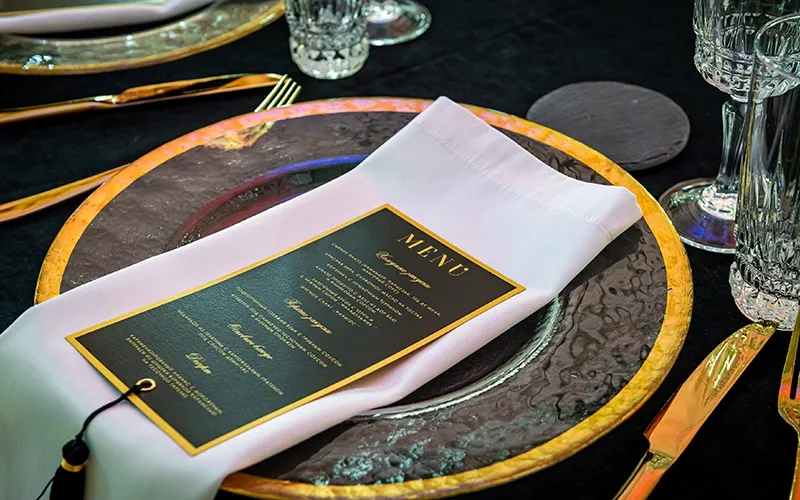
A tasting menu is a financial instrument. Most operators do not treat it as one.
Fine dining menus are engineered experiences — each course positioned relative to the others, each supplement priced for both margin and perception. At scale, the failure to maintain menu integrity across properties, manage seasonal updates systematically, and track course-level profitability means the menu that generated the reputation is not the menu that sustains the business.
- Menu updates — seasonal dish changes, ingredient substitutions, supplement additions — applied manually and inconsistently across properties
- No course-level or dish-level margin tracking — pricing decisions made by intuition rather than contribution analysis
- Tasting menu supplement sales (wine pairing, cheese course, truffle supplement) not tracked as a separate revenue line — upsell performance invisible
- Private dining and event menus priced and managed outside the main POS — no consolidated view of event vs. à la carte revenue performance
- Digital menu presentation (QR menus, digital wine lists) not synchronised with POS — guests see items that are unavailable, or do not see items that have been added

You know which table turned slowest. You do not know why.
Fine dining generates extraordinarily rich data — cover flow, table turn time, course progression speed, wine pairing conversion, supplement attachment rate, no-show patterns by day and season. Most groups capture none of this systematically. The decisions that could be made from it — scheduling, menu engineering, reservation strategy — are made instead on experience and instinct.
- No live floor visibility during service — managers identifying underperforming tables from observation rather than real-time data
- Revenue per cover — across à la carte, tasting menu, event, and beverage — not reported at a granularity that informs pricing or menu decisions
- No-show and late cancellation patterns not tracked — reservation strategy not adjusted despite repeating loss from the same booking channels or time windows
- Property-versus-property benchmarking absent — a second location underperforming on average cover value goes undetected for months
- Chef and senior staff departure not reflected in operational data — the post-departure performance drop is felt before it is measured

The guest who felt remembered will return. The one who felt forgotten will not.
Fine dining loyalty is not a points programme. It is a relationship built through demonstrated memory — the fact that someone knows their preference, their history, their reason for being there. At one property, this is a relationship between guest and team. At five properties, it must be a relationship between the guest and the brand — which means it must live in a system, not in anyone's head.
- Guest preference and dietary information captured at one property and inaccessible at another — the second visit to the group is the first visit to that location
- No pre-arrival briefing system — VIP, anniversary, and regular guest notes not shared systematically with the service team before the guest arrives
- Post-dining follow-up not systematised — thank-you communications, feedback requests, and next-reservation prompts handled individually or not at all
- Membership and loyalty programmes operating independently of the POS — recognition of tier status depends on the guest identifying themselves rather than the system
- Complaint and recovery records not visible across properties — a guest who experienced a service failure at Property A and was compensated is unknown to Property B
Curious how your current setup compares to groups operating at your level?
We will map your current operational architecture against what leading fine dining groups at your scale have built — and show you where the gaps are.
Every gap in the dining experience has a structural answer.
The groups running fine dining across five, ten, or twenty properties with consistent standards are not doing so through superior talent alone. They have built the infrastructure that makes consistency the path of least resistance — for every team member, at every service, at every location.
Table management fragmented across properties. Reservations, floor plans, and cover flow managed separately at each location — no group-wide view of occupancy, no shared guest history, no centralised wait-list intelligence.
Unified table and reservation management across all properties. One view of every cover across the group. Guest history, preferences, and notes accessible at any property. Cover flow and turn-time data visible in real time from head office.
Course-based service running on verbal convention. Kitchen orchestration dependent on communication between front and back of house that degrades under pressure — course timing inconsistent, pacing driven by the kitchen's readiness rather than the table's preference.
Course-based KDS with table-level orchestration. Every course timed to the table. The kitchen receives dishes in sequence, not in batch. Service pacing becomes a system decision, not a verbal one — consistent across every team, at every service.
Premium inventory managed reactively. No recipe-level depletion for high-cost ingredients, no wine and food inventory unified in a single view, no supplier performance tracking — margin leakage invisible until month-end analysis.
Recipe-level inventory across food and beverage. Every dish and every pour depletes against a recipe. Cost-per-cover calculated daily. Supplier performance tracked automatically. Premium ingredient ordering driven by actual depletion, not estimation.
Guest intelligence locked in individual memory. Dietary preferences, seating preferences, occasion history, and complaint records living in notebooks, email threads, or the head of whoever took the original booking.
CRM integrated with reservations and POS. Every guest interaction — what they ordered, what they said, what they celebrated, what went wrong — attached to a profile accessible at every property. The second visit to the group feels like the second visit to the same restaurant.
Billing complexity that ends the evening badly. Split bills, corporate accounts, event deposits, wine pairing supplements, private dining packages — managed through workarounds that create end-of-night reconciliation problems and occasionally require a guest to wait while staff sort out their bill.
Multi-bill, multi-payment, and event billing in a single system. Corporate accounts, split bills, and advance deposits handled natively. The final moments of the evening — settlement — match the quality of everything that preceded them.
What separates fine dining groups that endure from those that depend on brilliance.
Build the service memory into the system, not the staff
Every fine dining group eventually loses its maître d'. When that happens, groups with guest intelligence in a CRM lose a person. Groups without one lose the institutional memory of their best guests. The transition from personal hospitality to systematic hospitality is not a downgrade — it is the only mechanism by which guest relationships survive the inevitable changes in the team who built them.
Audit your guest intelligence →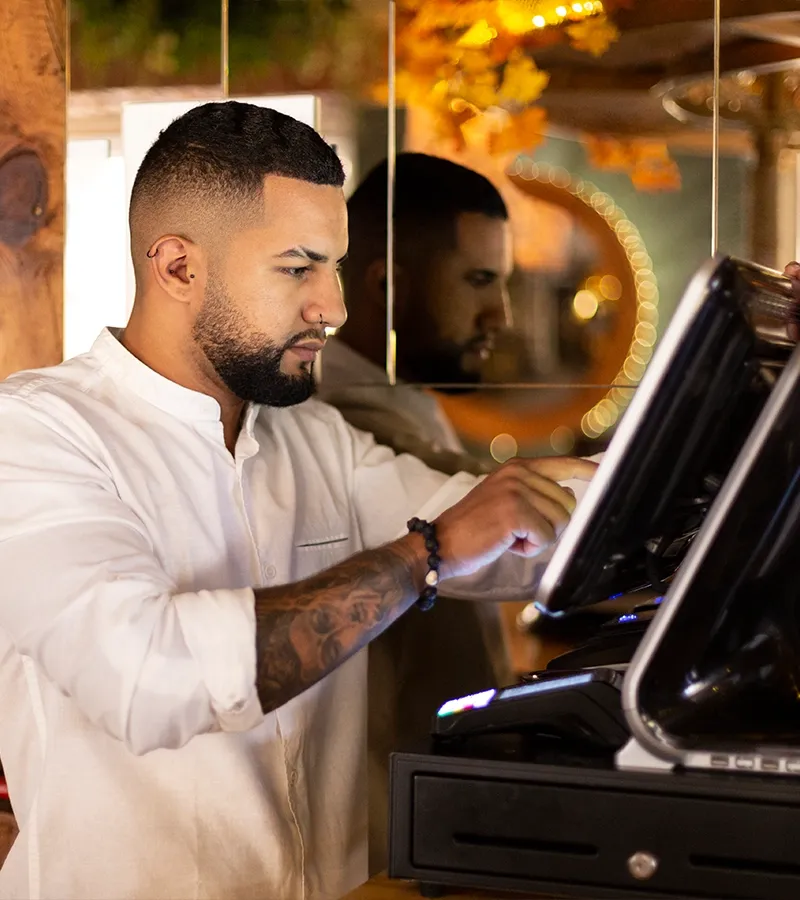
Design the floor for revenue, not aesthetics
Table layout is typically a design decision. At scale, it is a commercial one. Cover flow, turn time by section, average dwell time by day-part — all of these are manageable with data and invisible without it. Groups that instrument their floors know which tables generate the most revenue per hour, which sections run slow, and which reservation patterns consistently produce no-shows.
Map your cover flow →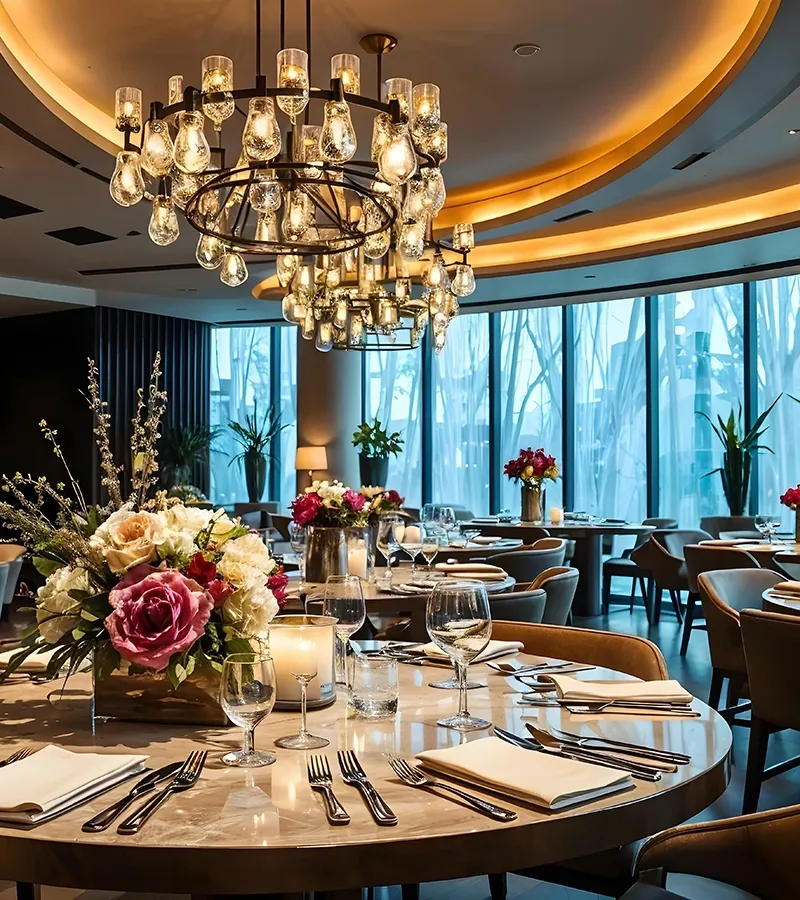
Treat tasting menu margins with manufacturing rigour
A ten-course tasting menu at £200 per head sounds like a high-margin product. In practice, with premium ingredients, specialist preparation, extended service time, and high front-of-house ratios, the contribution margin can be surprisingly compressed. Groups that track cost-per-cover at the dish and course level — adjusting for seasonal ingredient variation, supplement attachment rates, and beverage pairing revenue — sustain their financial model.
Measure your margins →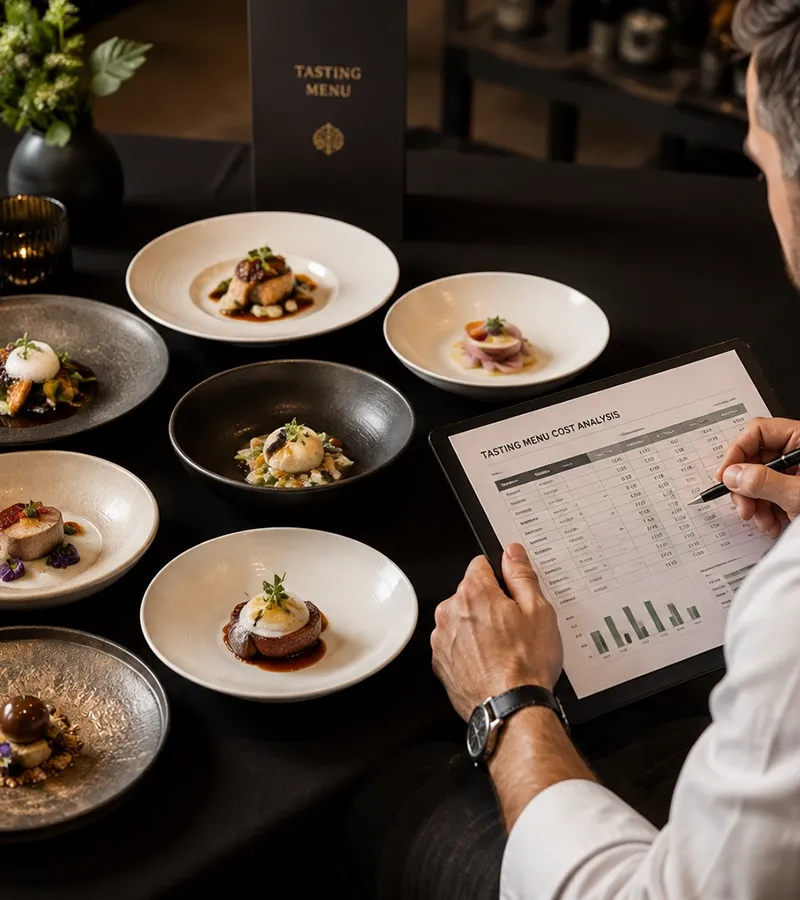
Standardise the service knowledge, not just the menu
A fine dining team carries an enormous volume of product knowledge — provenance stories, flavour profiles, wine pairing rationale, allergen information across thirty dishes, service sequence for the tasting menu. When this knowledge lives only in the minds of experienced staff, turnover is catastrophic. Groups that document service knowledge in accessible, searchable systems retain institutional intelligence across team changes — and can onboard new talent to standard in days, not months.
Codify your service knowledge →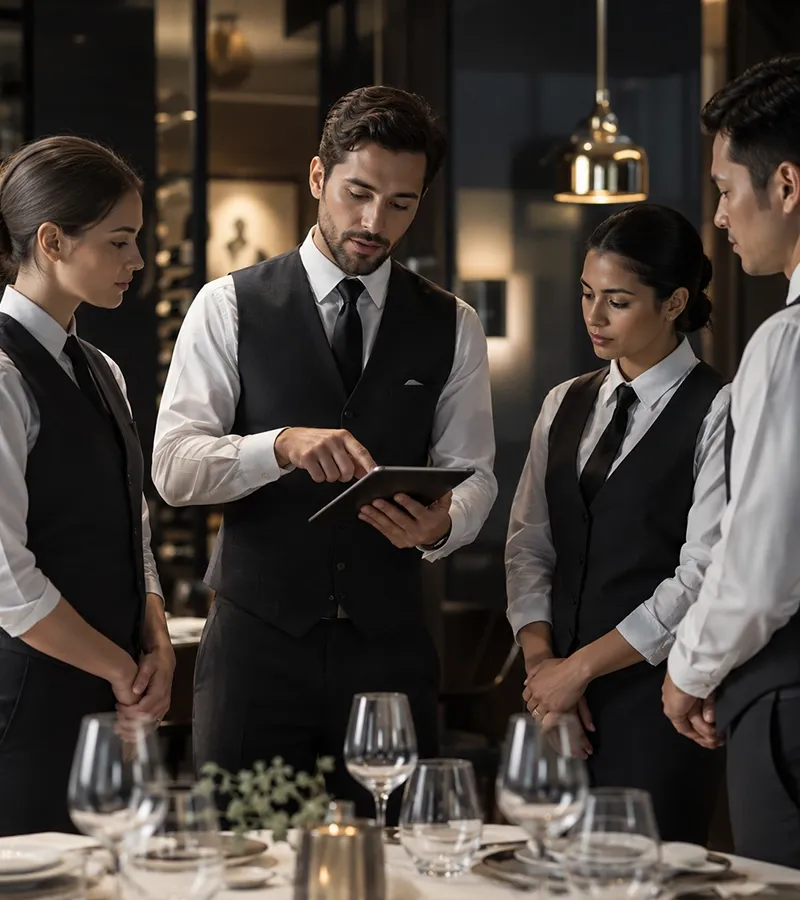
Open new properties faster by inheriting the foundation
The time between a new fine dining property signing its lease and serving its first cover is shaped almost entirely by how much of the operational foundation can be copied from existing properties. Groups with centralised menu architecture, standardised POS configuration, and pre-built integrations open in weeks. Groups that rebuild every property from scratch take months — and spend the first year in a state of operational improvisation that shows in the guest experience.
Plan your next opening →
Reading that sharpens the operator's perspective.
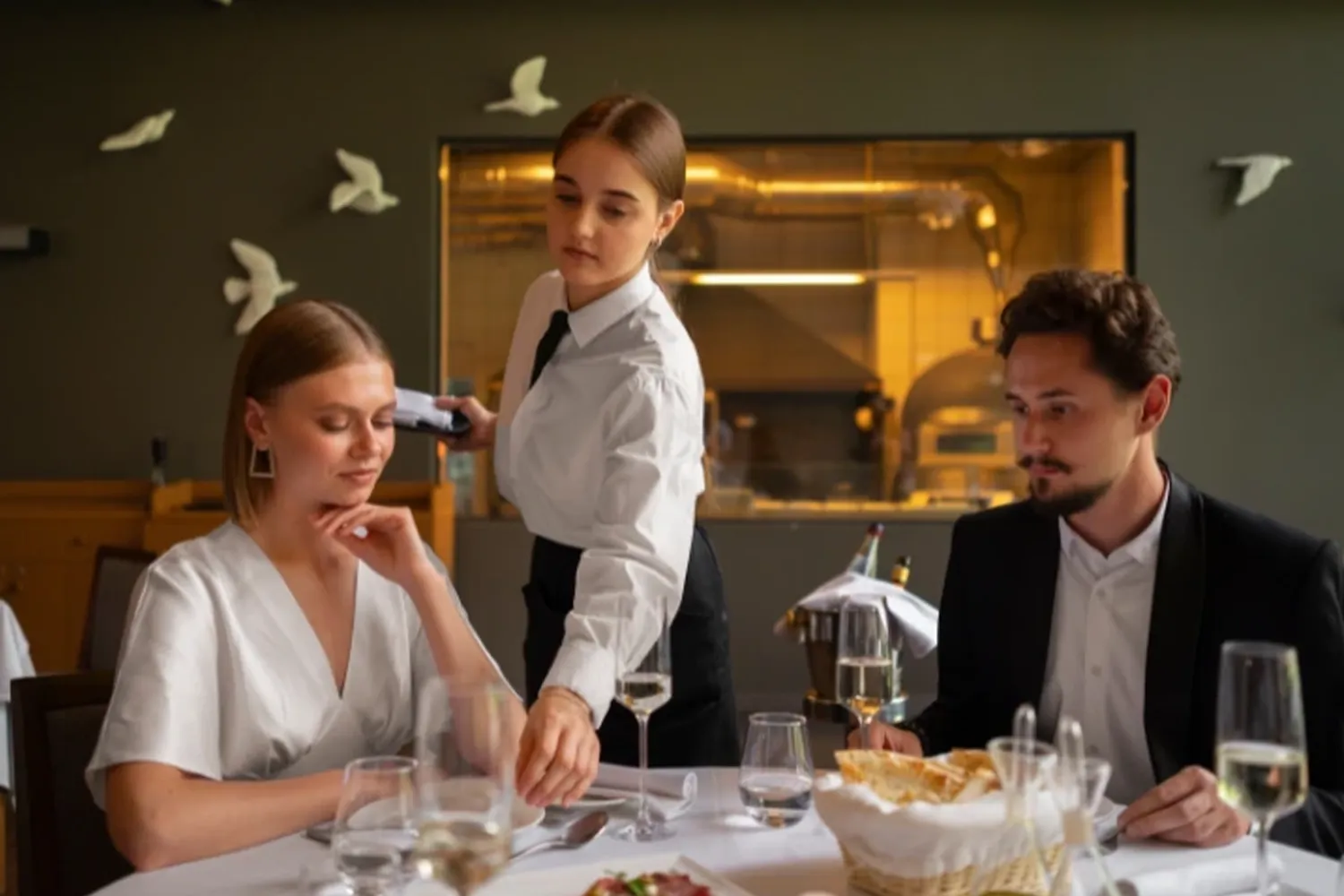
Fine Dining Restaurant Food Delivery vs Dine-In: Trends, Challenges & Opportunities
In this article, we examine the contrasting worlds of fine dining restaurant food delivery vs dine-in, the motivations behind this shift, and its implications for restaurant owners, chefs, and guests.
Read article →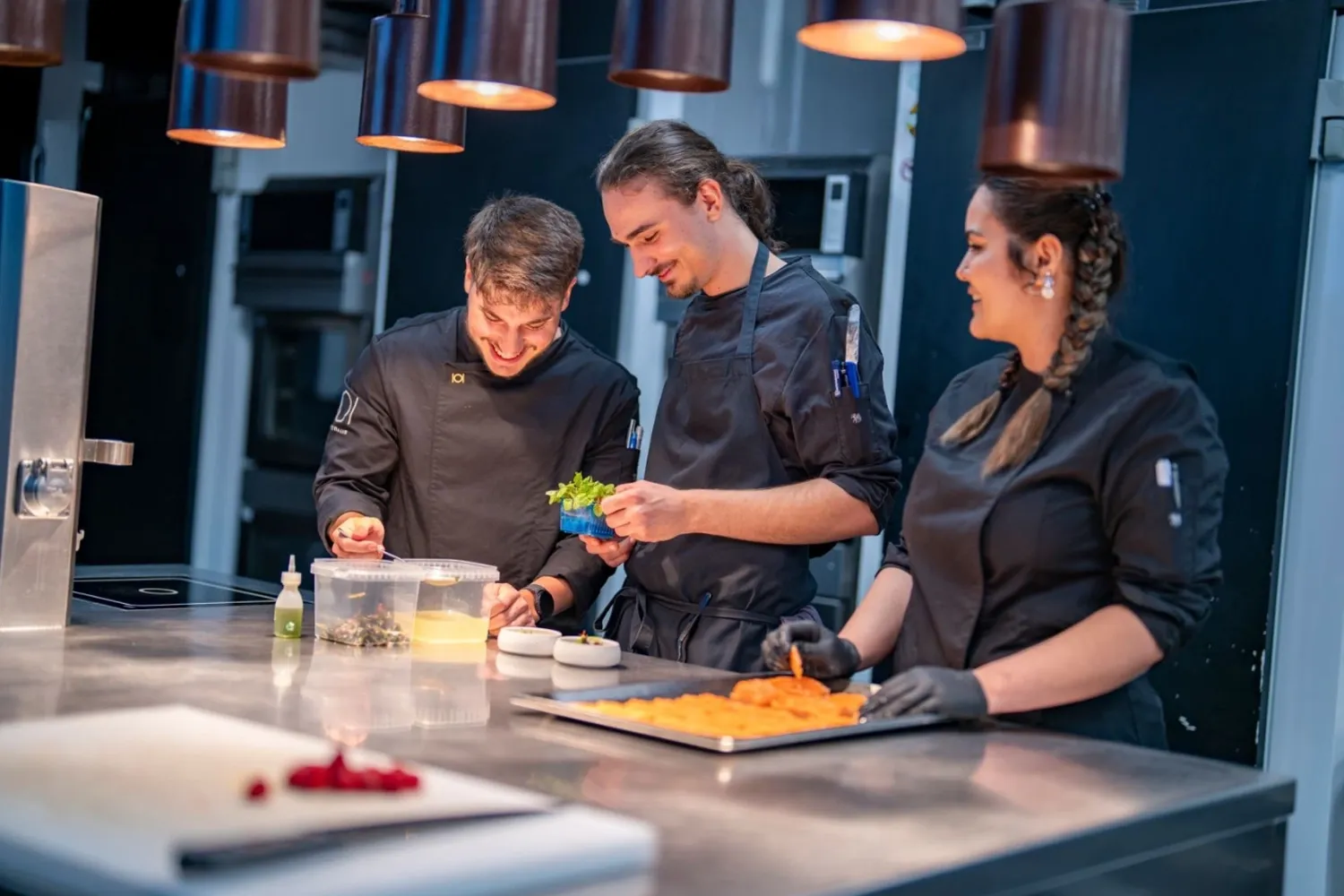
What Happens When Fine Dining Meets the Physics of a Theme Park? Eatrenalin.
Eatrenalin in Rust, Germany, blends a moving dining experience with Michelin-level cuisine, taking guests through an immersive eight-course meal as their tables glide through themed rooms.
Read article →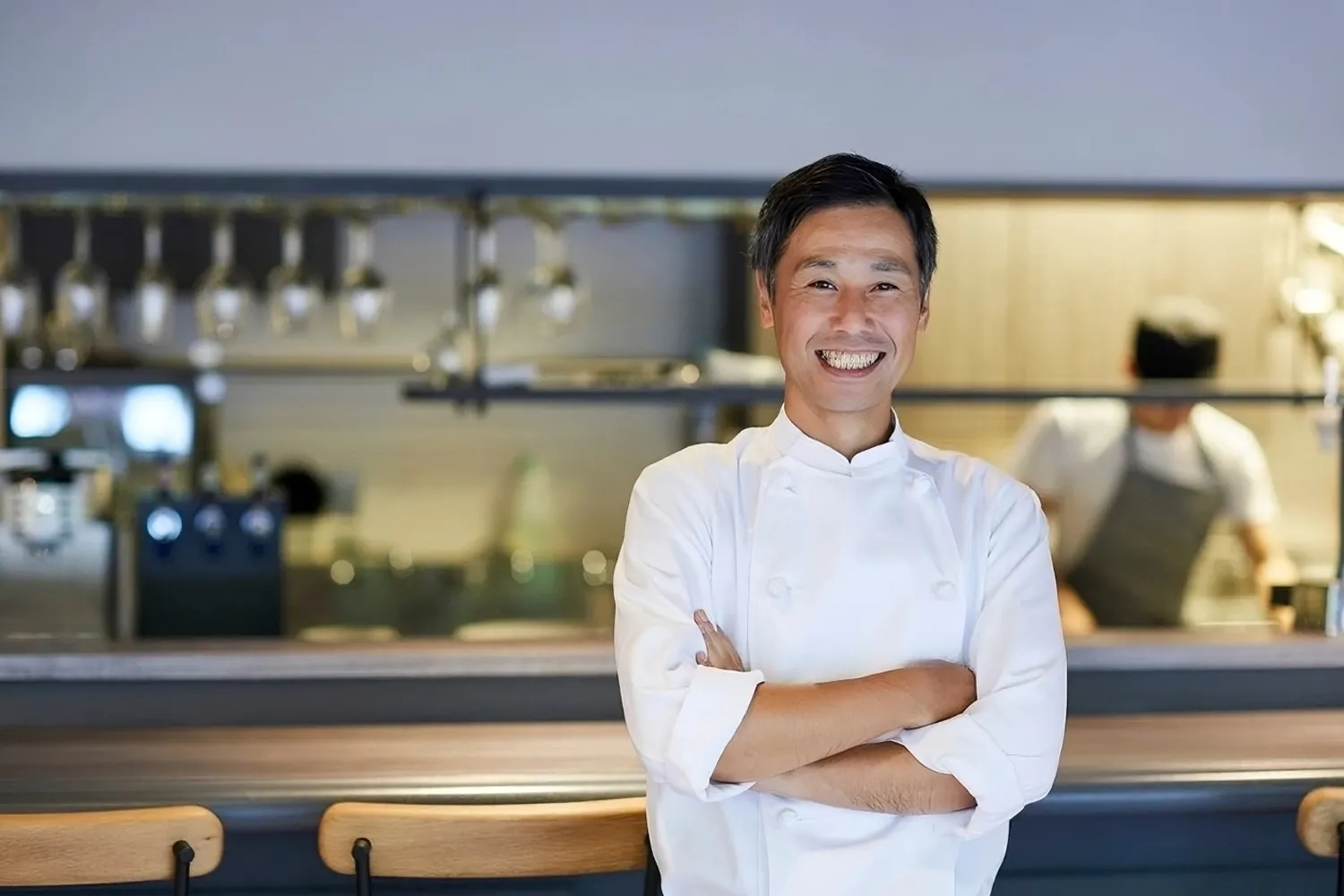
How to Open a Fine Dining Restaurant: Setup Guide, Requirements & Operational Tips
Opening a fine dining restaurant isn’t just about serving great food. It’s about precision, consistency, and elevating every guest’s experience to the level of expectation.
Read article →An honest assessment of where your operation actually
We will not present a product demonstration. We will ask about your current properties, your service architecture, your guest intelligence setup, and your operational bottlenecks — and then tell you, candidly, what the best-run groups at your scale are doing that your current setup does not yet support.
Trusted by 25,000+ restaurants across 50+ countries














































 G2 Leader·4.8★
 Best Restaurant POS·Gartner Digital Markets
 Capterra·4.8★